As a supplier of hand pallet stackers, we often get asked whether these tools are suitable for retail stores. In my experience, the answer is a resounding yes. Hand pallet stackers can offer numerous benefits to retail environments, from improving efficiency to enhancing safety. In this blog, we'll delve into the reasons why hand pallet stackers are a great fit for retail stores, explore different types available, and provide some considerations for making the right choice for your business.
Benefits of Hand Pallet Stackers in Retail Stores
1. Efficiency
One of the primary advantages of using hand pallet stackers in retail stores is the significant boost in efficiency. Retailers often receive large shipments of goods that need to be unloaded from delivery trucks and moved to storage areas or directly onto the sales floor. Hand pallet stackers allow employees to quickly and easily transport heavy pallets of merchandise, reducing the time and effort required compared to manual handling.
For example, a 2 Ton Pallet Stacker can effortlessly lift and move pallets weighing up to two tons, enabling workers to handle larger quantities of goods in a single trip. This not only speeds up the receiving process but also allows for faster restocking of shelves, ensuring that products are readily available for customers.
2. Space Utilization
Retail space is often at a premium, and efficient use of storage areas is crucial. Hand pallet stackers can help maximize vertical space by enabling pallets to be stacked higher. This allows retailers to store more inventory in a smaller footprint, reducing the need for additional storage facilities and potentially saving on rent and other associated costs.
With the ability to stack pallets vertically, retailers can create more organized and compact storage areas, making it easier to locate and access specific products. This can lead to improved inventory management and reduced instances of lost or misplaced items.
3. Safety
Manual handling of heavy pallets can pose significant safety risks to employees, including back injuries, strains, and sprains. Hand pallet stackers are designed to minimize these risks by providing a safe and efficient way to lift and move heavy loads.
Most hand pallet stackers are equipped with features such as hydraulic lifting systems, which require less physical effort from the operator, and safety brakes to prevent accidental movement of the stacker. Additionally, the use of a hand pallet stacker allows employees to keep a proper lifting posture, reducing the risk of injury.
4. Cost-Effectiveness
Compared to larger, more expensive forklifts or other material handling equipment, hand pallet stackers are a cost-effective solution for retail stores. They are relatively inexpensive to purchase or lease, and their maintenance costs are typically lower as well.
Furthermore, hand pallet stackers do not require specialized training or licensing to operate, which can save on training costs and allow employees to quickly get up to speed on using the equipment. This makes them a practical choice for small to medium-sized retail stores with limited budgets.

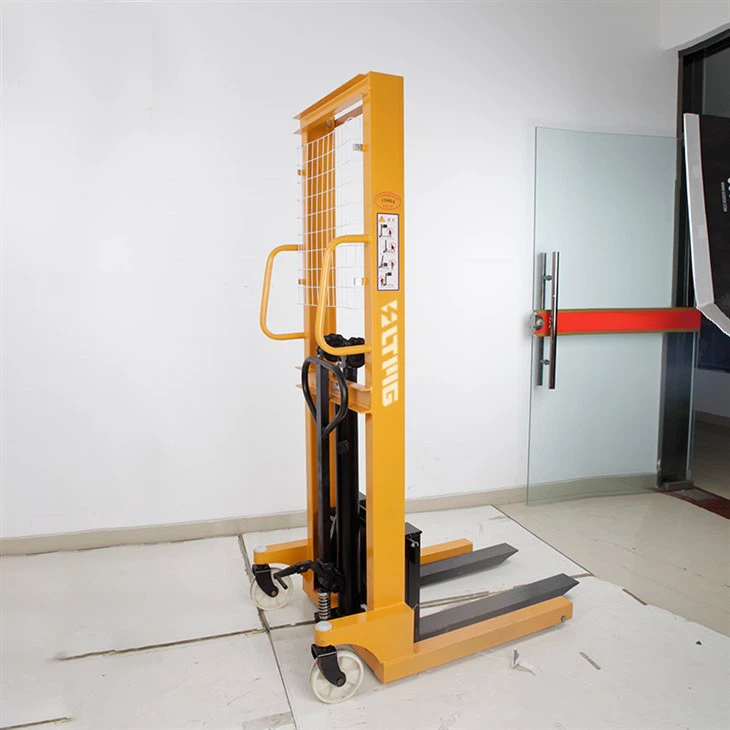
Types of Hand Pallet Stackers
1. Manual Hydraulic Hand Pallet Stacker
A Manual Hydraulic Hand Pallet Stacker is one of the most common types of hand pallet stackers used in retail stores. These stackers are powered by a hydraulic pump, which is operated manually by the operator using a pumping handle. The hydraulic system allows the stacker to lift and lower heavy pallets with ease.
Manual hydraulic hand pallet stackers are relatively simple to operate and require minimal maintenance. They are also highly maneuverable, making them suitable for use in tight spaces such as narrow aisles or small storage areas.
2. Electric Hand Pallet Stacker
Electric hand pallet stackers are powered by a battery and offer several advantages over manual hydraulic stackers. They are typically more powerful and can lift heavier loads, making them suitable for larger retail stores or those that handle heavier merchandise.
Electric hand pallet stackers also offer greater precision and control, as the lifting and lowering operations are controlled by an electric motor. This can make them more efficient and easier to operate, especially for inexperienced operators. Additionally, electric stackers are generally quieter and produce fewer emissions compared to their manual counterparts, making them a more environmentally friendly option.
3. Semi-Electric Hand Pallet Stacker
Semi-electric hand pallet stackers combine the features of manual and electric stackers. They are typically equipped with an electric lifting mechanism, which allows for easy and efficient lifting of pallets, while the movement of the stacker itself is still manual.
This type of stacker is a good compromise between the cost and functionality of manual and electric stackers. It offers the benefits of electric lifting without the need for a fully electric stacker, making it a popular choice for retail stores that require occasional heavy lifting but do not have the budget for a full electric model.
Considerations for Choosing a Hand Pallet Stacker for Your Retail Store
1. Load Capacity
The first consideration when choosing a hand pallet stacker for your retail store is the load capacity. You need to determine the maximum weight of the pallets you will be handling and choose a stacker with a load capacity that exceeds this weight. This will ensure that the stacker can safely and efficiently handle your heaviest loads.
2. Lift Height
The lift height of the stacker is another important factor to consider. You need to determine the maximum height to which you will need to lift the pallets, whether it's for storage on shelves or for loading onto trucks. Choose a stacker with a lift height that meets your requirements.
3. Maneuverability
In a retail store environment, maneuverability is crucial. You need to choose a stacker that can easily navigate through narrow aisles and tight spaces. Look for stackers with a small turning radius and a compact design.
4. Battery Life (if applicable)
If you are considering an electric or semi-electric hand pallet stacker, battery life is an important consideration. You need to ensure that the battery can last for a full shift without needing to be recharged. Consider the frequency of use and the duration of each use when choosing a stacker with an appropriate battery life.
5. Budget
Finally, your budget will play a significant role in your decision. Hand pallet stackers come in a wide range of prices, from basic manual models to high-end electric ones. Determine your budget and look for a stacker that offers the features and functionality you need within your price range.
Conclusion
In conclusion, hand pallet stackers are an excellent choice for retail stores. They offer numerous benefits, including increased efficiency, better space utilization, improved safety, and cost-effectiveness. With a variety of types and models available, you can find a hand pallet stacker that meets the specific needs of your retail business.
If you're interested in learning more about Hand Pallet Stacker For Material Handling or are ready to discuss your specific requirements for a retail store, we're here to help. Contact us today to start a conversation about how our hand pallet stackers can enhance your retail operations and drive your business forward.
References
- "Material Handling Equipment: Selection and Application" by J. A. Tompkins and J. A. White
- "Warehouse Design and Management" by R. M. Gudehus and M. Kotzab