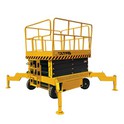
When it comes to electric mast lifts, one of the most frequently asked questions is, "How long does it take to charge an electric mast lift?" As a trusted supplier of mast lifts, I understand the importance of this query for our customers. In this blog post, I'll delve into the factors that influence charging time and provide you with a comprehensive understanding of what to expect.
Understanding Electric Mast Lifts
Before we discuss charging times, let's briefly understand what electric mast lifts are. Electric mast lifts are versatile pieces of equipment used in various industries, including construction, maintenance, and warehousing. They are designed to provide safe and efficient access to elevated work areas. These lifts are powered by electric motors, which are driven by rechargeable batteries. The type of battery, its capacity, and the charging system all play a crucial role in determining the charging time.
Factors Affecting Charging Time
Battery Type and Capacity
The most common types of batteries used in electric mast lifts are lead - acid and lithium - ion. Lead - acid batteries are more traditional and have been used in industrial equipment for a long time. They are relatively inexpensive but have a lower energy density compared to lithium - ion batteries. A typical lead - acid battery in a mast lift might have a capacity ranging from 100Ah to 300Ah.
Lithium - ion batteries, on the other hand, are becoming increasingly popular due to their higher energy density, longer lifespan, and faster charging capabilities. A lithium - ion battery with the same physical size can store more energy than a lead - acid battery. For example, a lithium - ion battery in a mast lift could have a capacity of 150Ah - 400Ah, providing more power for longer periods of operation.
The larger the battery capacity, the longer it will take to charge. A 300Ah lead - acid battery will take longer to charge than a 100Ah lead - acid battery, all other factors being equal.
Charging System
The charging system of an electric mast lift is another critical factor. There are two main types of charging systems: standard chargers and fast chargers.
Standard chargers are the most common and are usually included with the mast lift. They are designed to charge the battery slowly and steadily, which is better for the long - term health of the battery. A standard charger for a lead - acid battery might have a charging current of around 10A - 20A. Using a standard charger, a fully depleted 200Ah lead - acid battery could take anywhere from 10 to 20 hours to charge.
Fast chargers, as the name suggests, can charge the battery much more quickly. They have a higher charging current, sometimes up to 50A or more. However, fast charging can generate more heat, which may reduce the lifespan of the battery if not properly managed. A fast charger can reduce the charging time of a 200Ah lead - acid battery to around 4 - 8 hours.
Lithium - ion batteries can also benefit from fast - charging technology. Some lithium - ion battery systems in mast lifts can be charged to 80% capacity in as little as 1 - 2 hours using a fast charger.


State of Battery Discharge
The state of the battery when you start charging also affects the charging time. If the battery is only partially discharged, it will take less time to charge compared to a fully depleted battery. For example, if a 200Ah lead - acid battery is only 50% discharged, it will take approximately half the time to charge compared to when it is fully discharged.
Typical Charging Times for Different Mast Lifts
Smaller Single Mast Lifts
For smaller single mast lifts, such as the 4m 6m 8m 10m Single Mast Lift, these often come with relatively smaller batteries. A typical lead - acid battery in a small single mast lift might have a capacity of around 100Ah - 150Ah. Using a standard charger, it could take around 8 - 12 hours to fully charge a depleted battery. If a fast charger is used, the charging time can be reduced to 3 - 6 hours.
Larger Vertical Mast Lifts
Larger vertical mast lifts, like the Vertical Mast Lift LTPV0911 11.2Meters and LTPV0911 Compact Self - Propelled Mast Lifts, usually have larger batteries with capacities ranging from 200Ah to 300Ah. With a standard charger, a fully depleted battery in these larger mast lifts could take 15 - 25 hours to charge. Fast chargers can cut this time down to 6 - 12 hours.
Tips to Optimize Charging Time
- Regular Maintenance: Keep the battery and charging system well - maintained. Check the battery terminals for corrosion and clean them regularly. Ensure that the charger is in good working condition.
- Partial Charging: Instead of waiting for the battery to be fully depleted, consider charging it when it reaches around 20% - 30% capacity. This can reduce the overall charging time and also extend the battery's lifespan.
- Use the Right Charger: Make sure you are using the charger recommended by the manufacturer. Using an incompatible charger can not only increase the charging time but also damage the battery.
Conclusion
The charging time of an electric mast lift depends on several factors, including the battery type and capacity, the charging system, and the state of battery discharge. As a supplier, we offer a range of mast lifts with different battery and charging options to suit your specific needs. Whether you need a quick - charging solution for continuous operation or a more cost - effective standard charging system, we have the right product for you.
If you are interested in purchasing an electric mast lift or have more questions about charging times and our products, please feel free to contact us. Our team of experts is ready to assist you in finding the perfect mast lift for your requirements.
References
- Industry standards for electric mast lift batteries
- Manufacturer's specifications for various mast lift models