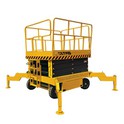
Leveling a mast lift is a critical process that ensures the safety and efficiency of operations when working at height. As a trusted mast lift supplier, we understand the importance of proper leveling and are here to guide you through the steps. In this blog, we'll explore the key aspects of leveling a mast lift, from understanding the equipment to the practical steps involved.


Understanding Mast Lifts
Before delving into the leveling process, it's essential to have a basic understanding of mast lifts. Mast lifts are vertical access equipment that provides a stable platform for workers to reach elevated heights. They are commonly used in various industries, including construction, maintenance, and warehousing. Our company offers a range of mast lifts, such as the Aluminum Alloy Single Mast Aerial Platform, LTMG Power Stocker Lift LTPV0507, and Single Mast Vertical Aluminum Ladder Lift, each designed to meet different job requirements.
Why Leveling is Important
Leveling a mast lift is crucial for several reasons. First and foremost, it ensures the safety of the operator and any workers on the platform. An unlevel mast lift can cause instability, increasing the risk of tipping over, especially when the platform is extended to its maximum height. This can lead to serious injuries or even fatalities.
Secondly, proper leveling is essential for the smooth operation of the mast lift. When the lift is level, the hydraulic and mechanical systems can function correctly, allowing for precise movement and positioning. This improves the efficiency of the work and reduces the wear and tear on the equipment.
Pre - Leveling Checks
Before attempting to level the mast lift, it's important to conduct a series of pre-leveling checks. These checks help to identify any potential issues that could affect the leveling process or the safety of the operation.
- Inspect the Work Area: Look for any obstacles, uneven surfaces, or soft ground that could pose a problem. The work area should be clear of debris, and the ground should be able to support the weight of the mast lift.
- Check the Mast Lift: Inspect the mast lift for any visible damage, such as bent or cracked components. Check the tires or outriggers for proper inflation or extension. Make sure all the safety devices, such as the emergency stop button and safety rails, are in working condition.
- Review the Manufacturer's Manual: Different mast lifts may have specific leveling requirements. Refer to the manufacturer's manual for detailed instructions on leveling your particular model.
Leveling Steps
The following are the general steps for leveling a mast lift:
Step 1: Position the Mast Lift
- Move the mast lift to the desired location using the controls. Make sure the lift is centered over the area where you plan to work. If the lift has outriggers, extend them fully according to the manufacturer's instructions.
Step 2: Use a Leveling Device
- Most mast lifts are equipped with built-in leveling devices, such as bubble levels or electronic sensors. These devices indicate whether the lift is level in both the front - to - back and side - to - side directions.
- If the lift is not level, you need to make adjustments. For mast lifts with adjustable outriggers, you can raise or lower the outriggers to achieve a level position. Use the controls on the lift to make these adjustments, and monitor the leveling device as you go.
Step 3: Check for Levelness in All Directions
- Once you think the lift is level, double - check it in both the longitudinal (front - to - back) and transverse (side - to - side) directions. Make small adjustments as needed to ensure that the bubble in the level is centered or the electronic sensor indicates a level position.
Step 4: Secure the Leveled Position
- After achieving a level position, lock the outriggers or any other leveling mechanisms in place. This prevents the lift from moving out of level during operation.
Special Considerations
Uneven Ground: If the ground is uneven, you may need to use leveling pads or blocks under the outriggers or tires. These pads can help to distribute the weight of the lift evenly and provide a more stable base.
- Sloped Surfaces: Leveling a mast lift on a sloped surface is more challenging. In some cases, it may not be safe to operate the lift on a slope that exceeds the manufacturer's recommendations. If you need to work on a slight slope, you may need to use additional leveling techniques or equipment, such as compensated leveling systems.
- Indoor vs. Outdoor Use: When using a mast lift indoors, you may encounter smooth, even floors, which are generally easier to level on. Outdoor use, on the other hand, may present more challenges due to uneven terrain, soft ground, or slopes.
Maintenance and Safety After Leveling
After leveling the mast lift, it's important to perform regular maintenance to ensure its continued safe and efficient operation.
- Regular Inspections: Conduct daily inspections of the mast lift, including checking the leveling mechanisms, hydraulic systems, and safety devices. Any signs of wear or damage should be addressed immediately.
- Operator Training: Ensure that all operators are properly trained in the use and leveling of the mast lift. Training should cover pre-use checks, leveling procedures, and emergency operations.
- Safety Precautions: Always follow safety guidelines when operating the mast lift. This includes wearing appropriate personal protective equipment (PPE), such as hard hats and safety harnesses, and adhering to the load capacity limits of the lift.
Contact Us for Your Mast Lift Needs
If you're in the market for a high-quality mast lift or need further assistance with leveling and operating your existing equipment, we're here to help. Our team of experts can provide you with detailed information about our products, including the Aluminum Alloy Single Mast Aerial Platform, LTMG Power Stocker Lift LTPV0507, and Single Mast Vertical Aluminum Ladder Lift. We can also offer guidance on proper maintenance and safety procedures to ensure that your mast lift operates at its best.
If you have any questions or would like to discuss your specific requirements, please don't hesitate to reach out. We look forward to working with you to find the perfect mast lift solution for your business.
References
-
Manufacturer's manuals for mast lifts
-
Industry standards and guidelines for aerial work platforms