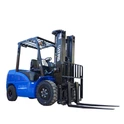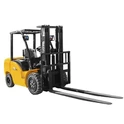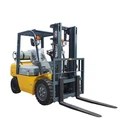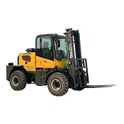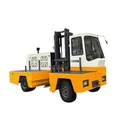
The overall performance of an electric-powered forklift battery without delay determines its productivity, working time, and long-term possession cost. Many customers record shortened battery lifespan or rising preservation expenses, and the root cause is frequently flawed charging practices.
By following scientific charging methods, a forklift battery's carrier life can be prolonged with the aid to 3–5 years, whilst incorrect charging may additionally shorten its lifespan by way of greater than 50%.
This information explains the integral necessities of electric-powered forklift charging and affords 7 core ideas to assist operators, fleet managers, and upkeep groups shield their lead-acid or lithium-ion batteries and ensure long-term dependable performance.
1. Essential Pre-Charging Checks: The Foundation of Safety and Efficiency
A whole inspection earlier than charging is imperative for stopping disasters and ensuring a secure forklift operation. Key areas to take a look at include:
1) Battery condition
Examine the battery case for leakage, swelling, cracks, or corrosion around the terminals. Any abnormalities should be repaired earlier than charging.
2) Charging environment
The charging vicinity must be:
- Well-ventilated to stop hydrogen fuel accumulation
- Dry and free from standing water
- Far from flames, warmth sources, or flammable materials
- Good airflow is particularly essential for lead-acid battery charging.
3) Charger compatibility
Ensure the charger's voltage and modern rankings fit the battery's specifications. Inspect charging cables and connectors for loose or unfastened contact.
For fleet management, businesses can enforce a "Pre-Charging Checklist" to standardize inspections and enhance safety.
2. Seven Core Charging Principles: The Key to Extending Forklift Battery Life
Principle 1: Charge at the Right Time-Avoid Deep Discharge and Frequent Partial Charging
For each lithium and lead-acid electric forklift, the choicest charging factor is 20%–30% closing capacity.
Deep discharge (below 10%) hastens plate sulfation in lead-acid batteries and will increase lithium plating in lithium batteries, each of which decreases battery capacity.
Similarly, ordinary "small top-up charges" can create a memory impact and shorten the fantastic runtime.
Companies have to lay out a constant charging schedule-such as at some stage in lunch breaks or after the end of every shift-to balance productivity and battery protection.
Principle 2: Use the Correct Forklift Charger-Never Mix or Substitute
Using a charger that does not healthy the battery can cause:
- Overcharging, swelling, or plate deformation (if the voltage is too high)
- Undercharging and decreased working time (if the voltage is too low)
For example, a 48V 50A forklift battery has to be paired with a 48V devoted charger.
To forestall misoperation, label chargers truly (e.g., "Charger for Forklift No.1") and assign committed personnel to manipulate them.
Principle 3: Complete Every Charging Cycle-Avoid Interruptions
An ideal charging cycle normally includes:
Constant Current Fast Charge
Constant Voltage Charge
Trickle Charge
Unplugging mid-charge leaves the battery in an "unsaturated" state, inflicting revolutionary potential decline.
Typical full-charge durations:
Lead-acid battery: 8–10 hours
Lithium battery: 3–5 hours
Operators need to constantly observe the manufacturer's charging instructions.
Principle 4: Control Charging Time Strictly-Prevent Overcharging
Overcharging is one of the fundamental motives of untimely battery failure.
Long-term overcharging can lead to:
- Electrolyte evaporation in lead-acid batteries
- Lithium dendrite increases in lithium batteries
Both phenomena pose serious security risks.
Using a clever computerized cutoff charger is recommended. If the use of a standard charger, set a timer to make sure energy is reduced within 1 hour after charging is completed.
Principle 5: Monitor the Charging Process and Respond to Abnormalities Quickly
During forklift charging, an everyday inspection is necessary. Operators must check:
- Battery temperature: need to stay under 45°C
- Abnormal smell: acid, burnt smell, or smoke may additionally point out leakage or a short circuit
- Charging connectors: keep away from overheating or loose contacts
Log inspections in a Charging Patrol Record and quit charging straight away if any abnormality appears. Only skilled technicians have to perform repairs.
Principle 6: Perform Regular Maintenance to Improve Charging Efficiency
Maintenance necessities fluctuate by battery type:
Lead-acid batteries
- Check electrolyte tiers weekly; fill up with distilled water only
- Clean terminal oxidation monthly
Lithium-ion batteries
Inspect Battery Management System (BMS) warnings monthly
Ensure voltage stability amongst cells
General renovation consists of cleansing dust, checking cable tightness, and making sure low-resistance connections to keep efficient charging.
Principle 7: Apply Different Charging Strategies for Lead-Acid and Lithium Batteries
Because the two battery kinds range in chemical behavior:
Lead-acid battery charging
- Low-temperature charging (<5°C) requires preheating
- Monthly equalization charging is recommended
Lithium-ion battery charging
- Ideal temperature range: 0°C–40°C
- Can be opportunity-charged, however, keep away from charging right away after heavy vibration- wait 30 minutes
Selecting the proper battery kind and charging approach based on your operations, climate, and forklift workload can significantly improve performance.
3. Common Charging Mistakes to Avoid
Many forklift battery screw ups are brought on by means of preventable mistakes:
1."Discharge completely earlier than charging."
Deep discharge appreciably shortens battery life.
2. Using any on-hand charger when one is broken
Incompatible chargers may also injure the battery or motive hearth hazards.
3. Charging whilst running the forklift
This forces the battery into simultaneous charge-discharge cycles, inflicting overheating.
4 . Extending charging time in bloodless environments
Low temperature reduces battery activity; extended charging might also cause swelling or leakage. Use winter-grade chargers instead.
4. Conclusion: Follow Scientific Charging Logic to Extend Forklift Battery Life
An expert electric powered forklift charging method has to comply with the built-in good judgment of:
Compatibility → Timing → Complete Cycle → Monitoring → Maintenance
By enforcing the 7 ideas above, organizations can:
Extend forklift battery lives by the aid of 50% or more
Reduce annual preservation charges by using up to 40%
Ensure secure productivity and fewer breakdowns
Companies are stimulated to incorporate these recommendations in their Electric Forklift Charging SOP, outline duties clearly, and supply operator education to maximize battery fee and decrease total working costs.