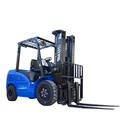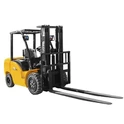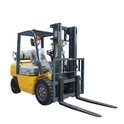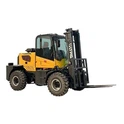
In warehouses, yards, and port operations, handling long loads - steel profiles, pipes, timber, and steel plates - has always been a headache for logistics managers. Traditional counterbalance forklifts and reach trucks often struggle with cargo that's 6, 10, or more meters long: wide turning radii, oversized aisle requirements, and a high risk of scraping or bending the load. This is exactly where the side loader forklift excels. This article walks through how a side loader works, its key advantages, common use cases, and what to look for when choosing one - and why it's widely regarded as the best forklift for long loads.

1. What Is a Side Loader Forklift
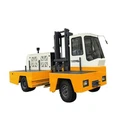
A side loader forklift, as the name suggests, is a forklift with forks mounted on the side of the machine rather than at the front. Unlike a conventional forklift that approaches a load head-on and drives forward or backward to pick it up, a side loading forklift travels parallel to the length of the load, with the forks extending outward from one side of the chassis to lift long, narrow cargo positioned alongside the vehicle.
This design creates a fundamental difference in how long materials are handled. With a standard forklift, a long load sits perpendicular to the direction of travel, making it prone to collisions with racking, support columns, or other vehicles during turns. A side loader, by contrast, keeps the load parallel to the vehicle body and moves lengthwise down the aisle - so it can pick up and place cargo with almost no extra turning space required.
In warehouse and yard environments, side loaders are typically built for high-level rack access, with a narrow chassis and an offset operator cab that gives a clear line of sight to the forks and load. This makes them particularly well suited for handling steel pipe, structural profiles, timber, aluminum extrusions, PVC pipe, and other long, flexible, or irregularly shaped materials.
2. Key Advantages of a Side Loader Forklift
Narrower aisles, better warehouse space utilization
Because a side loader travels along the length of the load, it doesn't need the wide turning radius that a reach truck or counterbalance forklift requires. That means aisles can be significantly narrower - so the same warehouse footprint can hold more racking and more long inventory, boosting overall storage density. This is one of the main reasons side loaders are the go-to solution for narrow aisle long load handling.
01
Safer, more stable handling of long materials
On a conventional forklift, a long load is essentially cantilevered - it sways during transport and is prone to bending, and cornering is where most collisions happen. A side loader carries the load parallel to the chassis with evenly distributed weight, so it rides more stably and reduces both product damage and safety risk.
02
Strong high-level reach capability
Most side loader forklifts offer substantial lift height, making it easy to access high-level racking. Combined with side-shift and reach/telescoping functions, this further improves space efficiency in high-bay, multi-tier storage.
03
Versatility across long, irregular cargo
Steel pipe, structural profiles, timber, door and window profiles, cable reels, sheet and plate stock - a side loader forklift handles them all. That versatility makes it a core piece of equipment for companies working with profiles, pipe, and similar long-format materials.
04
Fewer handling steps, higher throughput
A side loader can pick material directly from a delivery vehicle or yard stack and place it straight onto the target rack position, cutting out the repeated repositioning and re-handling that a standard forklift needs. The result is a noticeably faster overall workflow.
05
3. Common Applications for Side Loader Forklifts
- Metal material storage - raw material and finished-goods warehousing for steel pipe, structural profiles, aluminum bar, and steel plate in metal fabrication and trading businesses
- Timber and building materials - yard and warehouse management for logs, lumber, window/door profiles, and pipe in the building materials industry
- Pipe and tubing manufacturers - finished-goods storage and loading for PVC pipe, PE pipe, steel pipe, and similar producers
- Ports and logistics hubs - transfer and loading of bulk long cargo at container terminals and logistics parks
- Furniture and profile manufacturing - raw material handling for aluminum and wood profile stock on the shop floor
4. How to Choose the Right Side Loader Forklift
A few key factors to evaluate when selecting a side loader:
- Rated load capacity - Match the forklift's rated capacity to the weight of a single unit load and your typical batch weight, and avoid overloading.
- Lift height - Check that the mast's maximum lift height reaches your highest rack level.
- Fork length and load platform width - Confirm the fork length and platform dimensions fit your longest common load sizes, so material doesn't overhang and risk bending.
- Aisle width requirements - Compare your existing aisle widths against the side loader's minimum working aisle to see whether any layout adjustments are needed.
- Power type - Internal combustion (IC) models suit outdoor yards, ports, and heavy-duty, long-duration operations. Electric side loaders work better indoors - quieter, zero emissions, and better aligned with warehouse safety and environmental requirements.
- Brand support and parts availability - Long-load handling equipment sees intensive use, so it's worth prioritizing a brand like LTMG with a solid after-sales network and reliable parts supply to minimize downtime.
5. Get in Touch
For companies that regularly handle steel pipe, profiles, timber, and other long-format cargo, a side loader forklift doesn't just improve warehouse space utilization - it also significantly cuts down on product damage and safety risk, making it an essential piece of equipment in long load logistics.
If you're sourcing the right side loader forklift for your warehouse or yard, reach out to the LTMG forklift team. We offer side loader solutions across multiple capacities and power types, and our team can provide tailored equipment recommendations based on your specific operating environment to help take your warehouse logistics efficiency to the next level.