1. Definition and Importance of a Forklift Mast
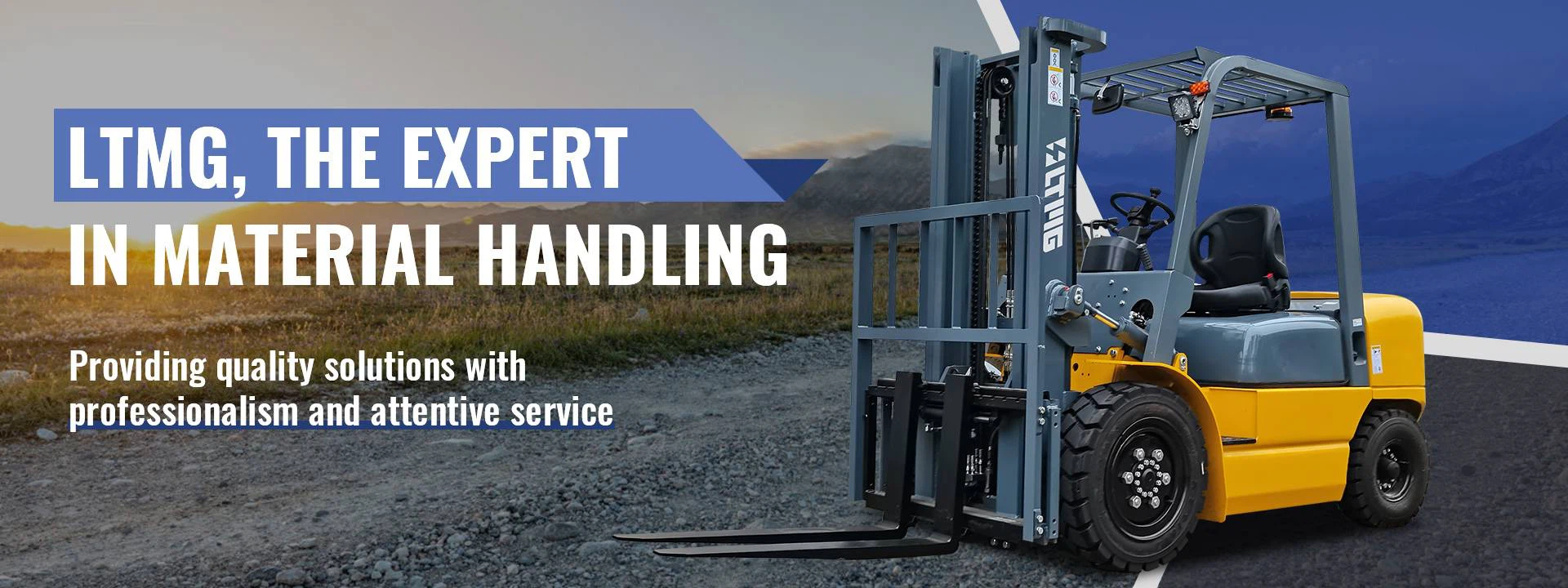
The forklift mast is one of the most critical components of any forklift truck. It directly governs the lifting, lowering, and precise stacking of goods, serving as the core working unit that transforms a forklift into a vertical material handling powerhouse. To adapt to diverse operations and real-world handling conditions, various types of mast for forklift models are available. Because mast performance directly impacts operational efficiency and safety margins, a comprehensive understanding of mast types is essential for accurate forklift selection.
2. Types of Forklift Masts

2.1 Two-Stage Standard Mast
The two-stage standard mast consists of one inner mast and one outer mast, without a central lifting cylinder. It allows for a small amount of free lift, but its overall lifting height is limited. Featuring a simple structure that ensures an unobstructed view from the driver's seat, it offers low manufacturing costs alongside the highest structural rigidity and stability. It is primarily used for low-level loading and unloading, making it the go-to standard equipment for open-air freight yards and conventional warehouses.

2.2 Two-Stage Full Free Mast
Building upon the two-stage standard design, this type incorporates a central lifting cylinder to achieve full free lift. Striking an excellent balance between maximum lift height and low clearance overhead, it is highly suitable for operational scenarios that demand both entry into containers/truck beds and standard-height stacking.

2.3 Three-Stage Full Free Mast (Triplex Mast)
The three-stage mast comprises one outer mast and two stages of telescoping inner masts, paired with an efficient central lifting cylinder. This configuration provides complete full free lift capabilities, allowing goods to be raised to higher positions. Because its lowered (collapsed) height remains remarkably low, it is the ideal container mast forklift choice for stacking operations inside height-restricted warehouses or standard shipping containers.

2.4 Four-Stage Full Free Mast (Quad Mast)
Consisting of one outer mast and three stages of telescoping inner masts, the four-stage mast features the most complex structure. Equipped with a high-specification central full free lift system, it delivers an ultra-high lifting range. Thanks to its multi-stage design, its collapsed height can be compressed extremely low, while its fully extended state offers maximum reach. It is widely utilized in extreme working conditions and specialized material handling scenarios with ultra-high racking, such as massive logistics hubs or cold storage facilities.

3. How to Select the Right Mast Type Based on Real-World Scenarios

3.1 Containers and Cold Storage Environments
The defining characteristic of these environments is restricted overhead clearance. For instance, the standard internal height of a shipping container is typically around 2 to 3 meters, and cold storage entryways are often built low to maintain thermal insulation. However, high-density stacking is still required inside.
Consequently, the chosen container forklift must feature full free lift functionality, and the collapsed height of the mast must be strictly controlled. The collapsed height of a three-stage full free mast can easily fit within these low-clearance limits, allowing the operator to drive deep into a container and utilize the central cylinder to stack goods high without raising the overall mast structure.
3.2 High-Level Racking Warehouses
Stacking operations in high-level racking systems rely heavily on the exceptional vertical lifting capabilities of modern warehouse forklifts. However, when selecting a model, you cannot rely solely on the rated nominal tonnage. You must consult the mast's high-level load capacity chart to compare the weight of your heaviest goods at the highest rack level. As a forklift mast extends upward, sway increases and the safe lifting capacity decreases; forcing an overload at high lifts poses severe safety risks. Generally, a three-stage full free mast is recommended for conventional high racks, while a four-stage full free mast is preferred for ultra-high racking or high-density cold storage systems.


3.3 Outdoor Heavy-Duty Transportation
Commonly found in steel mills, stone processing plants, ports, docks, and construction sites, these environments feature uneven outdoor terrain. These operations involve handling heavy loads ranging from several tons to dozens of tons. While the lifting height requirements are usually standard, the durability demands on the forklift truck are exceptionally high. For these scenarios, a two-stage standard mast is the recommended configuration. Its simple structure offers maximum durability, and the absence of a central cylinder provides an expansive field of view, significantly enhancing operational safety and simplifying routine maintenance.
4. Key Parameters and Considerations for Forklift Mast Selection

Lifting Height:
The distance from the forks to the ground when the forklift truck is on level, solid ground, the mast is vertical, and it is fully extended. This parameter dictates how high the forklift can stack goods. As a rule of thumb, the lifting height should be 20–30 cm higher than the top beam of your highest rack layer.
Maximum Extended Height:
The distance from the very top of the mast to the ground when fully extended. This indicates the total vertical clearance required during high-level operations. When selecting a forklift, compare this figure against indoor obstructions like roof trusses, fire sprinklers, and hanging lights.


Collapsed Height (Overall Lowered Height):
The distance from the top of the mast to the ground when completely lowered. This is a core metric for a forklift's maneuverability, determining whether the vehicle can clear low doorways and entry gates
Free Lift Height:
The maximum height the forks can be raised before the inner mast sections begin to extend upward. This parameter determines whether the forklift can handle and stack loads in low-clearance spaces.


Rated Capacity and Operational Intensity:
The maximum weight the mast can safely lift at a standard load center distance. To prevent capacity loss at high elevations, always request the "high-level load capacity chart" from the manufacturer to verify capacity against your specific cargo weights and lift heights.
Brand Reputation:
As the primary load-bearing and working component of a forklift, the manufacturing precision of the mast directly affects vehicle lifespan and safety. Choosing a well-known, reliable brand is paramount. As a deeply trusted brand in engineering machinery, LTMG delivers superior quality, longer mast service life, and comprehensive after-sales support-offering an ideal balance of premium quality and cost-effectiveness.

5. Daily Maintenance of Forklift Masts
Whether handling heavy loads or performing high-lift operations, mast stability is directly tied to operator safety. Regular inspection and maintenance are essential.
Lifting Chains:
The chains directly execute the lifting and lowering actions. Inspect them regularly for abnormal wear or debris accumulation, and clean them promptly. Consistent lubrication of the forklift chains effectively minimizes friction and wear.
Hydraulic Pipelines:
The hydraulic system provides the core power for lifting and tilting. Because these lines operate under high pressure, any signs of damage or aging require immediate replacement to prevent high-altitude line bursts and cargo drops. Check regularly for cracks, bulges, or hard friction against the mast channel steel.
Mast Rollers:
Rollers serve as the bearings connecting the mast sections. Inspect roller surfaces for pitting or uneven wear, and ensure the guide rails are free of foreign objects. Clean and apply grease regularly. Severe vibration or screeching during high lifts indicates worn rollers that need immediate replacement.
Lifting and Tilting Cylinders:
Periodically inspect the piston rods of the lift and tilt cylinders for scratches or rust. Check for hydraulic fluid leaks; if fluid accumulation is found around the cylinder housing, replace the seals immediately.

6. Conclusion
The mast is not merely an attachment on a forklift truck; it is the vital link connecting warehouse efficiency with operational safety. When navigating complex market options, accurate equipment selection begins with a trusted brand.
Contact us today-LTMG will provide you with advanced technical support, helping you eliminate costly trial-and-error expenses while transforming every inch of your storage space into business profit!