1. Introduction
In warehouse operations, the dual mandates of maximizing spatial utilization and driving throughput efficiency remain constant challenges. Many warehouse managers face distinct dilemmas when purchasing material handling equipment. Given the significant capital investment and transportation costs associated with industrial fleets, acquiring the wrong machinery not only drains capital reserves but can also severely bottleneck logistics workflows.
Both the standard counterbalance forklift and the specialized reach truck forklift are engineered for efficient material handling, yet they possess distinct operational strengths and limitations. This comprehensive guide delivers a deep dive into the core differences between a traditional forklift truck and a reach truck, empowering you to make data-driven procurement decisions tailored perfectly to your facility's operational demands.
2. Defining the Equipment
While a standard forklift truck and a reach truck are both designed for high-efficiency material handling, they are engineered to execute fundamentally different tasks. Understanding these core design and functional variations is vital for optimizing your warehouse fleet layout and boosting overall operational productivity.

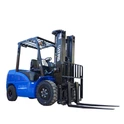
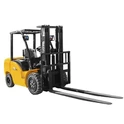
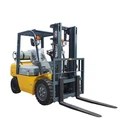
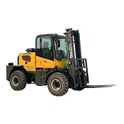
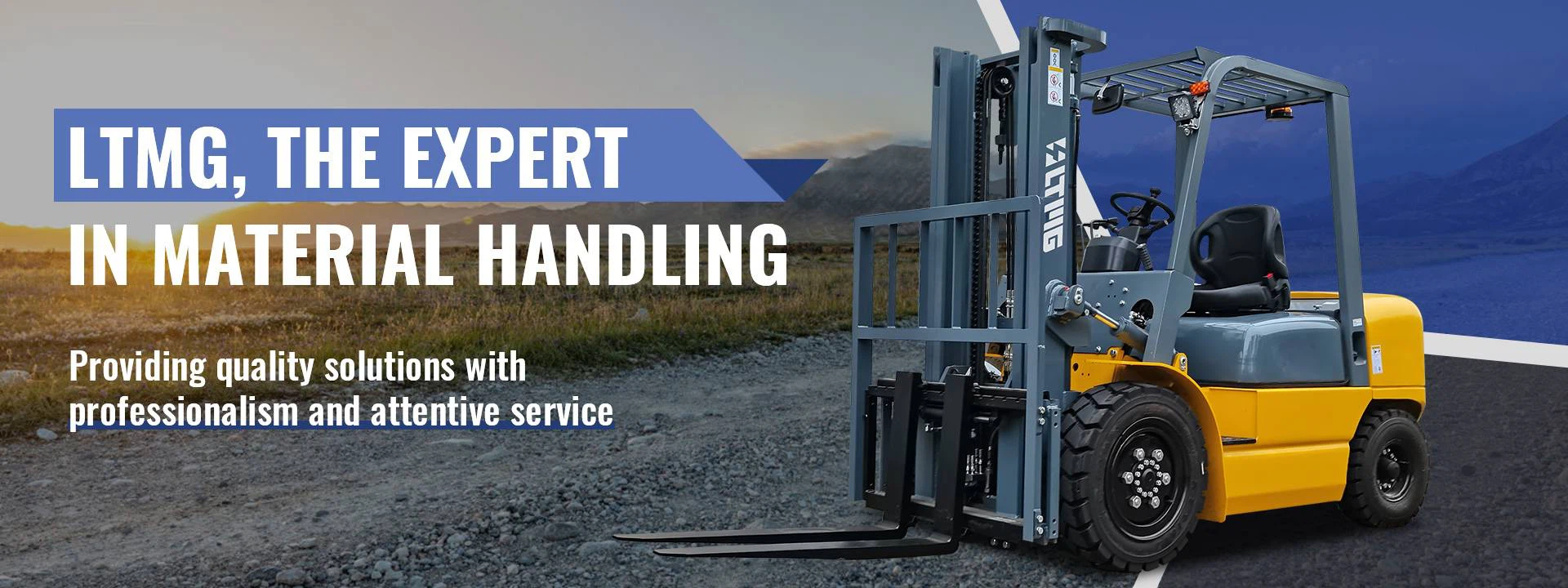
Counterbalance Forklift: Often generalized as the traditional forklift truck, its defining engineering feature is a heavy counterweight integrated into the rear of the chassis. This weight perfectly offsets the load handled on the forward forks. Widely deployed across manufacturing plants, logistics hubs, and construction environments, these trucks feature highly diverse power configurations (gasoline, diesel, or electric batteries) and support extensive specialized attachments. Overall, the counterbalance forklift stands out as a high-capacity, heavy-duty, multi-purpose workhorse built for versatile indoor and outdoor applications.
Reach Truck: In high-density warehousing environments, floor space directly dictates profitability. When a standard counterbalance forklift struggles within tight aisles, a forklift reach truck emerges as a purpose-built solution for indoor storage optimization. Its signature characteristic is an outrigger mechanism allowing the mast and forks to extend forward. This enables the machine to reach deep into racking systems while maintaining an incredibly compact chassis profile and tight turning radius, making it ideal for narrow aisle navigation.
3. Core Technical Comparison
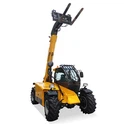
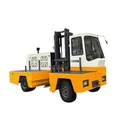
The following structural matrix outlines the primary technical differences between a standard counterbalance forklift and a reach truck:
|
Appearance |
|
|
| Product |
Counterbalance Forklift |
Reach Truck |
|
Turning Radius |
larger |
smaller / highly agile |
|
Maximum Lift Height |
Typically around 3 meters |
Extends up to 6 meters or higher |
|
Load Capacity Range |
High to extremely heavy capacity |
Moderate |
|
Power Sources |
IC Engine (Gasoline/Diesel) or Electric Battery |
Electric Battery powered |
|
Operator Positioning |
Sit-down |
Stand-up or Sit-down |
|
Attachment Compatibility |
Extensive (clamps, rotators, side-shifters) |
limited, specialized for standard pallets |
|
Applicable Scenarios |
Indoor / outdoor |
Indoor |


4. Critical Procurement Decision Factors
1. Operational Aisle Width & Space Utilization
The most immediate distinction between a reach truck and a traditional counterbalance forklift lies in physical footprint and structural maneuverability. For navigating and executing turns within narrow aisles, the reach truck forklift offers unparalleled advantages. Its compact frame and exceptional turning capabilities allow operators to pivot smoothly within confined storage aisles, executing precise loading and stacking operations.
Conversely, while a standard forklift offers basic maneuverability, its wider turning radius requires expansive aisle clearances. Choosing a forklift reach truck allows facility managers to narrow their aisle dimensions, maximize pallet position density, and significantly reduce spatial overhead costs.
2. Floor Terrain and Surface Composition
A standard counterbalance forklift can be equipped with a broad array of heavy-duty tire types, backed by a robust ground-clearance chassis and high-torque powertrains. This enables it to deliver optimal traction across uneven outdoor yards, gradients, and varied indoor flooring. If your logistics workflow involves frequent outdoor transitions, rough terrain, or inconsistent surfaces, the traditional forklift remains the definitive choice.
In contrast, a reach truck demands strict floor surface uniformity. Because it handles high-elevation loads, it utilizes small-diameter solid polyurethane wheels and a very low ground-clearance chassis. Rough or uneven surfaces compromise stability, making flat, polished concrete floors the mandatory environment for safe, highly efficient operation.
3. Vertical Lift Height Requirements
If your warehouse relies on vertical high-bay racking systems, a reach truck forklift matches those requirements perfectly. Featuring a specialized telescoping mast structure and a highly rigid frame, it smoothly lifts standard loads to elevated racking positions, maximizing cubic storage volume.
While a counterbalance forklift can achieve modest lift heights, its physical layout limits high-level stability, making it better suited for low-to-mid level stacking. If your operational focus centers on rapid ground-level cross-docking or heavy pallet handling, the standard forklift provides a fast, stable, and highly dependable solution.
4. Precision and Specialized Material Handling
When handling fragile, high-value, or sensitive goods, the reach truck stands out for its high precision. It offers expansive cabin visibility alongside highly responsive hydraulic controls, enabling operators to achieve millimeter-level fork positioning during intricate adjustments.
A traditional forklift design favors raw stability and high-capacity durability. Its control interface is straightforward and robust, optimized for rapid loading cycles and high-tonnage cross-docking where heavy throughput is prioritized over micro-adjustments.

5. Preventive Maintenance & Operational Care

Counterbalance Forklift Maintenance Priorities
Because these trucks often work under high-tonnage loads and demanding outdoor conditions, structural components face significant mechanical stress. Routine preventative checks are essential for maintaining workplace safety:
- Tire Wear and Integrity: Frequent operation on abrasive outdoor surfaces accelerates tire degradation. Operators must routinely check for tread wear indicators and remove embedded debris like gravel or metal shards. If running pneumatic tires, maintaining precise inflation pressures is critical to eliminate tipping risks under heavy loads.
- Hydraulic Leakage & Fluid Purity: The hydraulic system serves as the muscle of the truck. Daily inspections should check for weepage or fluid leaks along cylinders, lines, and fittings. Keeping hydraulic fluid free of contaminants is vital; dirty fluid degrades internal valves, leading to lift pressure loss and sluggish response.
- Steer Axle Lubrication: Counterbalance trucks carry heavy rear counterweights alongside forward payloads, placing extreme pressure on the steering knuckles, pins, and linkages. Regular lubrication of the steer axle extends component life, ensures smooth steering control, and protects operator safety.
Reach Truck Maintenance Priorities
- Reach Channel Cleanliness & Lubrication: The defining feature of a reach truck is its forward-extending mast assembly. The associated travel channels, rollers, and chains easily collect airborne warehouse dust and debris. Left unchecked, accumulation causes rough movement, premature wear, or binding. Regularly cleaning and lubricating these channels keeps fork extensions smooth and precise.
- Electric Powertrain and Battery Care: These units run on pure electric drive systems, requiring focused electrical maintenance. Keep motors free of dust and inspect cable connections regularly. For lead-acid configurations, maintain distilled water levels and monitor acid specific gravity; for lithium-ion setups, ensure the charging ports stay clean and run standard diagnostics.
- Polyurethane Wheel Inspection: Unlike rubber forklift tires, a forklift reach truck relies on hard polyurethane wheels. These are ideal for indoor floors but can crack or chip if driven over floor joints, debris, or small potholes. Maintenance teams must keep warehouse floors clean and inspect wheels daily for flat spots or structural damage to prevent high-altitude mast sway.

6. Summary and Conclusion
Choosing between a reach truck and a standard counterbalance forklift isn't about identifying which machine is universally superior; it is about selecting the perfect operational fit for your specific material handling environment.
Partner with Us for Your Fleet Strategy: Our specialized engineering team is ready to evaluate your warehouse layout, floor specifications, lift requirements, and maintenance capabilities. Contact us today to receive a customized, high-ROI fleet management solution tailored specifically to your operation!
Welcome to purchase
- Narrow Aisle Efficiency
- High-Rack Lifting Capability
- Compact Maneuverability
- Precision Load Handling


- Heavy-Duty Performance
- Versatile Indoor/Outdoor Use
- Stable Counterweight Design
- Robust Load Capacity