I. The Importance of Choosing the Right Forklift Tires
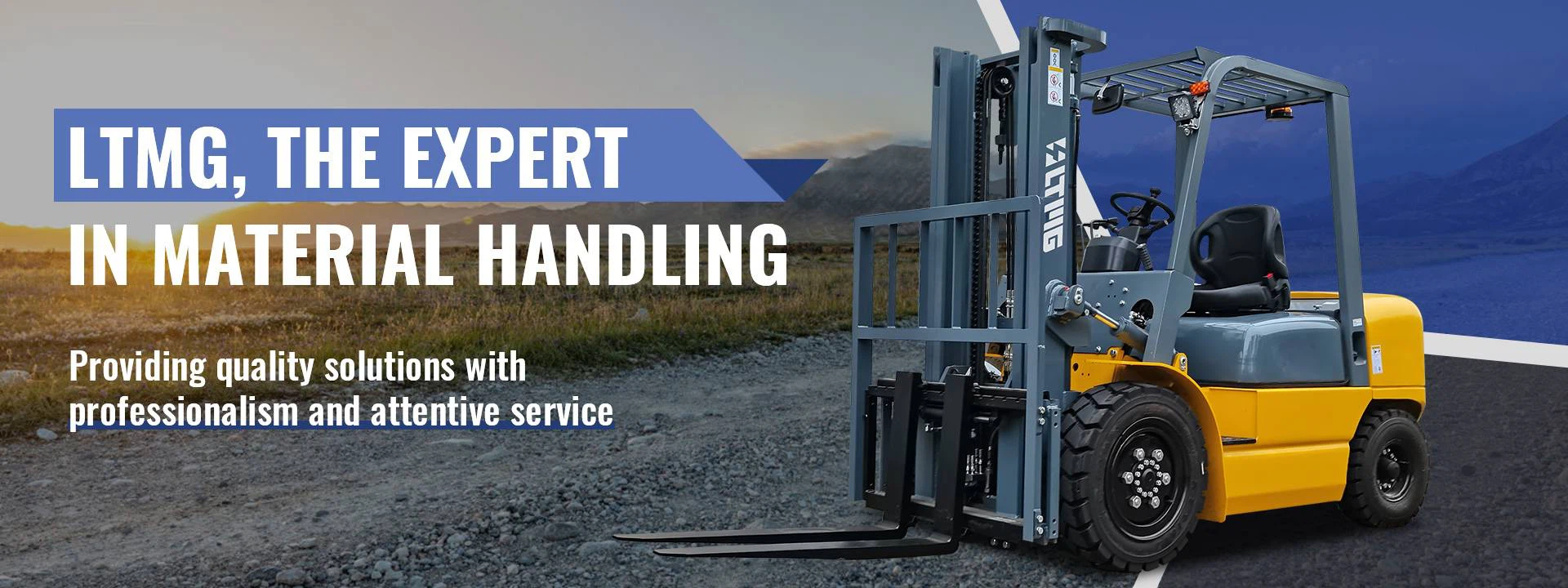
In the precise choreography of modern warehousing, port logistics, and heavy industrial manufacturing, forklifts serve as the indispensable backbone of material handling. However, while fleet managers frequently focus on load capacities, mast heights, and powertrain options, one critical component is often overlooked-the forklift tires.
As the sole point of contact between the vehicle and the ground, a tire is far more than a simple consumable. The specific type of forklift tires you choose directly dictates whether a machine can achieve peak performance under distinct working conditions. Selecting an incompatible tire type can lead to a sharp increase in long-term maintenance and replacement costs. Worse yet, using the wrong tire in slick, corrosive, or high-load environments significantly elevates the risk of severe safety hazards like tipping or skidding-endangering your operators and disrupting your entire supply chain.
For business owners and fleet managers, understanding the physical properties and optimal environments for different tire types is a fundamental step toward reducing costs, boosting operational efficiency, and ensuring job site safety.
II. The 3 Main Types of Forklift Tires
1. Solid Tire
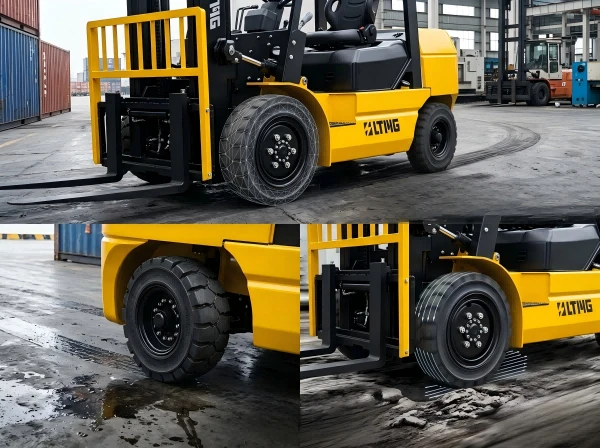
A solid tire is manufactured by molding high-density, wear-resistant solid rubber or polyurethane directly onto a steel band. Because they feature no inner tube, they do not require inflation.
- Key Advantages: Their compact diameter and lower ground clearance provide an exceptionally low center of gravity, resulting in a tight turning radius and superior load stability.
- Best Suited For: Smooth, flat indoor environments-such as epoxy or polished concrete floors-working in tandem with electric forklifts for high-density stacking.
- Limitations: If used on uneven, potholed outdoor surfaces, the lack of shock absorption will accelerate mechanical fatigue in forklift components and increase the risk of cargo slipping off the forks.
2. Pneumatic Tires
Structurally similar to heavy-duty truck tires, pneumatic tires are filled with high-pressure air.
- Key Advantages: Their air-cushioned design absorbs severe impacts and vibrations, delivering a much smoother and more comfortable ride for the operator. They feature a larger footprint and deeper tread patterns, providing the aggressive traction required for challenging terrains.
- Best Suited For: Rugged outdoor yards, gravel surfaces, and uneven terrain.
- Limitations: Because they rely on air pressure, they carry a distinct puncture risk. Operating around sharp debris can lead to sudden blowouts, causing immediate operational downtime and potentially catastrophic tipping accidents during heavy, high-elevation lifts. For demanding outdoor applications, investing in a high-quality tire pneumatic configuration is essential for safety.
3. Non-Marking Solid Tires (Eco-Friendly Solid Tires)
Constructed from advanced eco-friendly polymers (such as polyurethane) and utilizing silica instead of traditional carbon black, these tires are designed for specialty environments.
- Key Advantages: They are available in light colors (like white or light gray) and leave absolutely no black scuff marks during travel or sudden braking, keeping facility floors pristine. Additionally, their lightweight composition and lower rolling resistance reduce energy consumption, extend battery life, and minimize emissions.
- Best Suited For: High-standard indoor operations with strict hygiene and emissions regulations, including food processing plants, pharmaceutical cleanrooms, and electronics manufacturing facilities.
- Limitations: Misdeploying these tires on rough, debris-strewn outdoor surfaces will cause rapid, premature wear, neutralizing their energy-saving and floor-protecting benefits.
|
Comparison Dimension |
Solid Tire |
Pneumatic Tires |
Non-Marking Solid Tire |
|
Optimal Operating Conditions |
Flat, smooth indoor warehouses |
Rugged outdoor terrain, uneven yards |
High-standard clean indoor environments |
|
Puncture & Blowout Risk |
Extremely Low |
High |
Extremely Low |
|
Lifespan |
Long |
Moderate |
Moderate (Long in designated environments) |
|
Terrain Clearance & Shock Absorption |
Poor shock absorption and clearance |
Excellent terrain clearance and shock absorption |
Moderate shock absorption; low rolling resistance |
|
Initial Purchase Cost |
Moderate |
Low |
High |
|
Total Lifecycle Cost |
Low |
Moderate to High |
Low (when used correctly) |
Forklift Tire Quick Comparison Table
III. How Tire Choice Directly Impacts Forklift Performance
Your forklift tires do more than just carry weight; they are the core link transforming motor power into actual productivity. Your choice of tire reshapes vehicle performance across five critical dimensions:
- Load Stability: During high-lifting and stacking operations, minimal chassis wobbles are magnified exponentially at the top of the mast. A solid tire features minimal deflection under load, offering rigid, rock-solid support that stabilizes the chassis and keeps both cargo and operators safe.
- Braking Distance: In tight warehouse aisles where forklifts share space with pedestrians, braking distance is a matter of life and death. Pneumatic tires-or a heavy-duty tire pneumatic setup-excel outdoors by utilizing deep tread patterns and rubber elasticity to maximize the contact patch, drastically shortening emergency stopping distances on rough terrain. Indoors, however, standard rubber can skid on epoxy. Non-marking solid tires solve this by ensuring immediate, precise braking without scuffing expensive floors.
- Turning Radius: Maximize warehouse density requires tight layouts and narrow aisles. Because solid options feature smaller diameters and compact profiles, they allow for a larger steering angle, shortening the forklift's wheelbase and allowing electric trucks to navigate tight racking configurations with ease.
- Operator Comfort: Pneumatic options cushion operators against punishing floor vibrations, mitigating long-term occupational hazards like lower back strain. Conversely, solid variants transfer impacts directly through the chassis, which can accelerate operator fatigue and degrade steering precision over long shifts.
- Overall Forklift Lifespan: Driving over uneven ground sends harsh counter-forces through the axles, steering linkages, mast bearings, and hydraulic seals, leading to mechanical fatigue. Air-filled tires act as protective cushions, absorbing these forces and extending the mechanical life of the machine. Indoors, low-resistance non-marking tires reduce motor strain and heat generation, protecting the electrical system and extending battery runtimes.
IV. Selection Diagnostic: 6 Questions to Find Your Perfect Tire
To pinpoint the exact forklift tires your application requires, evaluate your operations against these six diagnostic questions:
- Is the forklift operating strictly indoors, or does it cross outdoors?
If your machine never leaves an indoor factory floor or cold storage unit, a solid tire is the premier choice for stability and space optimization. If its route includes outdoor loading docks, yards, or unpaved staging areas, pneumatic alternatives become mandatory.
- Is the operating surface perfectly smooth or rough and uneven?
Smooth concrete or epoxy surfaces allow the high rigidity of solid variants to shine, translating directly into traveling efficiency. For gravel, potholes, or outdoor ramps, choose air-filled tires to cushion the vehicle and protect its structural welds from stress fractures.
- Are there sharp metal shavings, gravel, or liquid spills on the floor?
In metal recycling yards, machining shops, or glass factories, sharp debris is a constant hazard; solid options are mandatory here to eliminate blowout risks. If the floor is frequently wet, oily, or covered in cleaning chemicals, deep-tread pneumatic models are required to prevent dangerous hydroplaning and skidding.
- Does your layout demand extreme vehicle compactness and maneuverability?
If your facility utilizes narrow aisle layouts where space is at a premium, a compact solid profile is essential to shorten your turning radius. For wide-open ports or expansive yards where travel speed and ground clearance matter more than tight turns, large-diameter pneumatic options are superior.
- How much downtime and maintenance can your operation tolerate?
For multi-shift, high-intensity operations that cannot afford maintenance delays, solid models offer complete peace of mind-requiring no pressure checks and carrying zero risk of flats.
- Does your industry enforce strict environmental or cleanliness standards?
If you operate within food processing, medical manufacturing, or electronics assembly, you must deploy non-marking solid options to meet strict hygiene regulations and keep your facility free of carbon dust.
V. What Factors Affect Forklift Tire Lifespan?
- Surface Conditions: The texture of your floor is the primary driver of physical wear. Operating a forklift on unpaved ground, rough asphalt, or steel-grated ramps creates aggressive friction that can tear away rubber layers, wearing out a tire 2 to 3 times faster than operations on smooth concrete.
- Environmental Factors: Harsh ambient conditions degrade rubber compounds. High humidity, cold storage environments, or exposure to acids, oils, and chemical solvents accelerate rubber embrittlement, leading to chunking and cracking. Similarly, prolonged outdoor exposure to intense UV rays and heat causes heat buildup, softening the rubber and causing rapid, irregular tread wear.
- Operator Driving Habits: Aggressive driving habits drastically shorten tire life. Sudden acceleration, harsh braking, and spinning the wheels heat the rubber rapidly, leading to "burning" or severe sidewall deformation. Fast, sharp turns under heavy loads concentrate immense stress on a single side, causing severe shoulder wear and tread tearing.
VI. Conclusion
In the daily management of manufacturing plants and logistics hubs, forklift tires should never be dismissed as cheap, generic consumables. The precise selection of your tires directly impacts your fleet's load stability, operational safety, and overall mechanical lifespan.
If rapid tire wear or unexpected flat-tire downtime is eroding your operational profitability, it is time for an upgrade. Contact our engineering team today for a tailored, high-ROI tire solution optimized specifically for your facility!