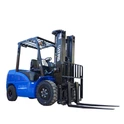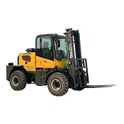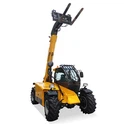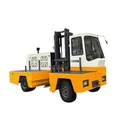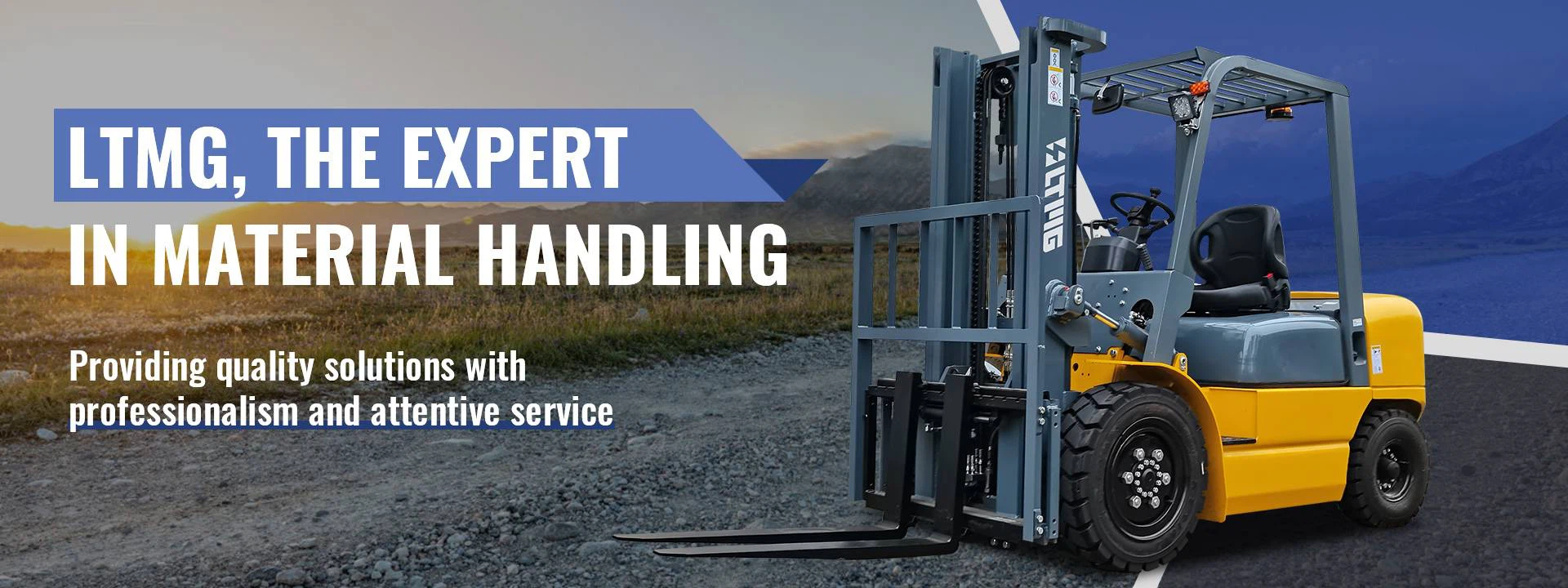
In modern industrial handling, the "last mile" often does not take place on smooth, paved surfaces. For South American farms and South African mines, conventional forklift equipment frequently struggles with complex ground conditions. In recent years, rough terrain forklifts have swept the global market with their strong adaptability, delivering productivity across a range of industrial scenarios. Particularly in the Americas and Africa, export sales of rough terrain forklifts have surged, making them a new growth engine for the global expansion of construction machinery.
Environmental Challenges for Handling Equipment

African Mines:The battle between red soil and dry seasons
Africa has vast and resource-rich mining areas, but most mine logistics depend on primitive red dirt roads. Lacking asphalt cover, these roads are prone to ruts and potholes after repeated heavy vehicle traffic, which worsens the already bumpy conditions and severely hampers transport efficiency.
In addition, the climate is extreme and unpredictable. During the dry season, dust fills the air, and fine particles cause significant harm to both machinery and human health. When the rainy season arrives, the red dirt roads easily turn into sticky, slippery mud. For ordinary industrial forklifts, low ground clearance and limited tire grip mean frequent bog-downs, wasted power, and greatly extended ore transport cycles.

Brazilian sugarcane fields: The complex terrain of the tropical savannah
Turning to South America, Brazil's sugarcane plantations-the world's largest-face a different set of challenges. The main growing areas are in the Brazilian highlands, which have a tropical savanna climate. The extremely pronounced dry and wet seasons create unique difficulties for handling operations.
The sugarcane harvest runs from April to November. The soil structure is complex, and rainfall easily creates seasonal swamps in low-lying areas. Because the ground is soft, slippery, and unstable, material loading, unloading, and transport require stronger all‑terrain capability. Otherwise, vehicles get stuck, efficiency drops, and the optimal processing window may be missed, resulting in significant economic losses.
Conquering the Rough: Turning "Impossible" into "Efficient"
Drawing on years of field data from Latin American and African markets, LTMG has redefined the maneuverability standards for all-terrain forklifts. Based on extensive customer feedback, we have deeply optimized the core architecture to ensure unwavering reliability and performance under extreme operating conditions.
Increased ground clearance for greater mobility
High ground clearance provides superior mobility, allowing the machine to travel easily on the roughest roads.
Professional rough terrain tires with deep tread and wide footprint
Wide tires increase ground contact area, reducing pressure on soft soil; deep treads provide strong grip, delivering powerful traction even on slippery, soft ground.
Powerful four‑wheel drive to overcome obstacles
The 4WD system ensures precise power distribution to each wheel. Whether climbing with a full load or escaping a mud pit, the rough-terrain performance provides robust support to keep production on schedule.
High‑mounted exhaust for improved water fording
For waterlogged and muddy low‑lying areas during the rainy season, we have adopted a high‑mounted exhaust design. This greatly increases fording depth, prevents muddy water from backflowing into the engine, and also protects the exhaust pipe from impact damage when off‑road.
Dual air filters for extreme dust protection
Separate air filters for the engine intake and the air conditioning system effectively filter dust and impurities from the air, extending engine life while providing a clean breathing environment for the operator.
To highlight the differences between rough terrain forklifts and standard forklifts, a comparison table is provided below

How to Choose the Right Rough Terrain Forklift?
- Load capacity: Maximum lifting weight and load stability when working on uneven ground.
- Terrain conditions: For soft, boggy ground, prioritize tire configuration; for rocky, rugged areas, consider chassis height and maximum gradeability.
- Frequency of use: For high‑intensity seasonal operations, check whether the equipment can run continuously, and factor in downtime costs during the off‑season.
- After‑sales support: Does the supplier have a mature global service network? Are genuine spare parts quickly available?
By carefully evaluating these factors, companies can ensure that the selected equipment meets their production needs.
Products We Offer
We offer a comprehensive range of all-terrain forklifts with capacities from 1.5 to 25 tons:


Versatility & Customization
We support a wide array of specialized attachments, including paper roll clamps, booms, tippers, and tire clamps, enabling a "one machine, multiple uses" mode. Whether for intensive logistics or demanding outdoor tasks, our forklifts provide tailored solutions through flexible attachment combinations.
When facing complex working conditions, you need more than just a machine – you need a professional material handling solution.
Tell us about your operating environment, and our professional sales team will recommend the most suitable model for you.
You will receive a customized quotation.
Call: 17350015962
Email: info@ltmg.com