1. Breaking the Limitations of Traditional Material Handling
For a long time, traditional forklifts have been the backbone of ground logistics and low-level stacking, powering countless warehouses and construction sites with their reliable performance. However, as modern job sites grow increasingly complex, standard forklifts often fall short.
Enter the telehandler (also known as a telescopic handler). Thanks to its unique design advantages, the penetration rate of the telescopic forklift in the material handling sector has been steadily rising, redefining our expectations of lifting machinery.
The core physical advantage of a telescopic forklift truck lies in its ability to reach forward and lift high simultaneously. This combined capability of vertical lifting and horizontal reaching is the key secret to breaking the limitations of traditional material handling.
2. From Construction Sites to Farms: Diverse Application Scenarios

Modern Construction Sites: In the past, low-rise building construction relied heavily on manual labor and traditional scaffolding to move materials-a process that was both time-consuming and hazardous. A telescopic handler forklift features exceptional vertical reach, allowing it to easily lift and precisely place materials like bricks and glass over obstacles directly to the second or third floor.
Livestock & Modern Farming: Agricultural terrain can be notoriously rugged. Standard forklifts often get stuck due to low ground clearance and insufficient tire traction, bringing operations to a costly halt. Conversely, a telescopic handler comes standard with robust four-wheel drive and high ground clearance, ensuring the vehicle powers through tough terrain to keep the farm running efficiently.

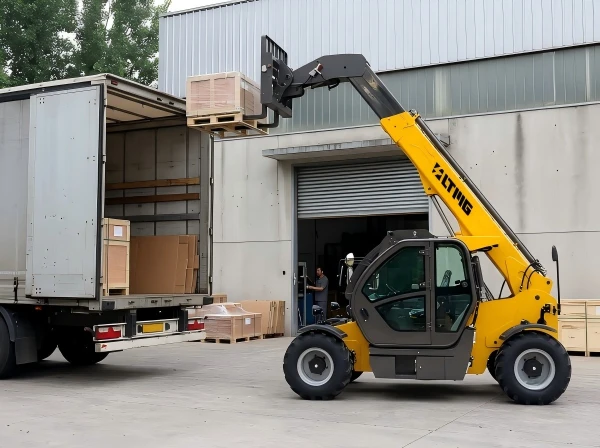
Warehouse Loading & Unloading: Traditional forklifts rely heavily on loading docks or ramps to bridge the gap into a truck bed. A telescopic forklift eliminates this bottleneck. With its superior forward reach and lifting capabilities, operators can unload cargo directly from one side of a flatbed without ever stepping onto the vehicle, saving significant scheduling costs and turnaround time for temporary warehouses lacking standard docks.
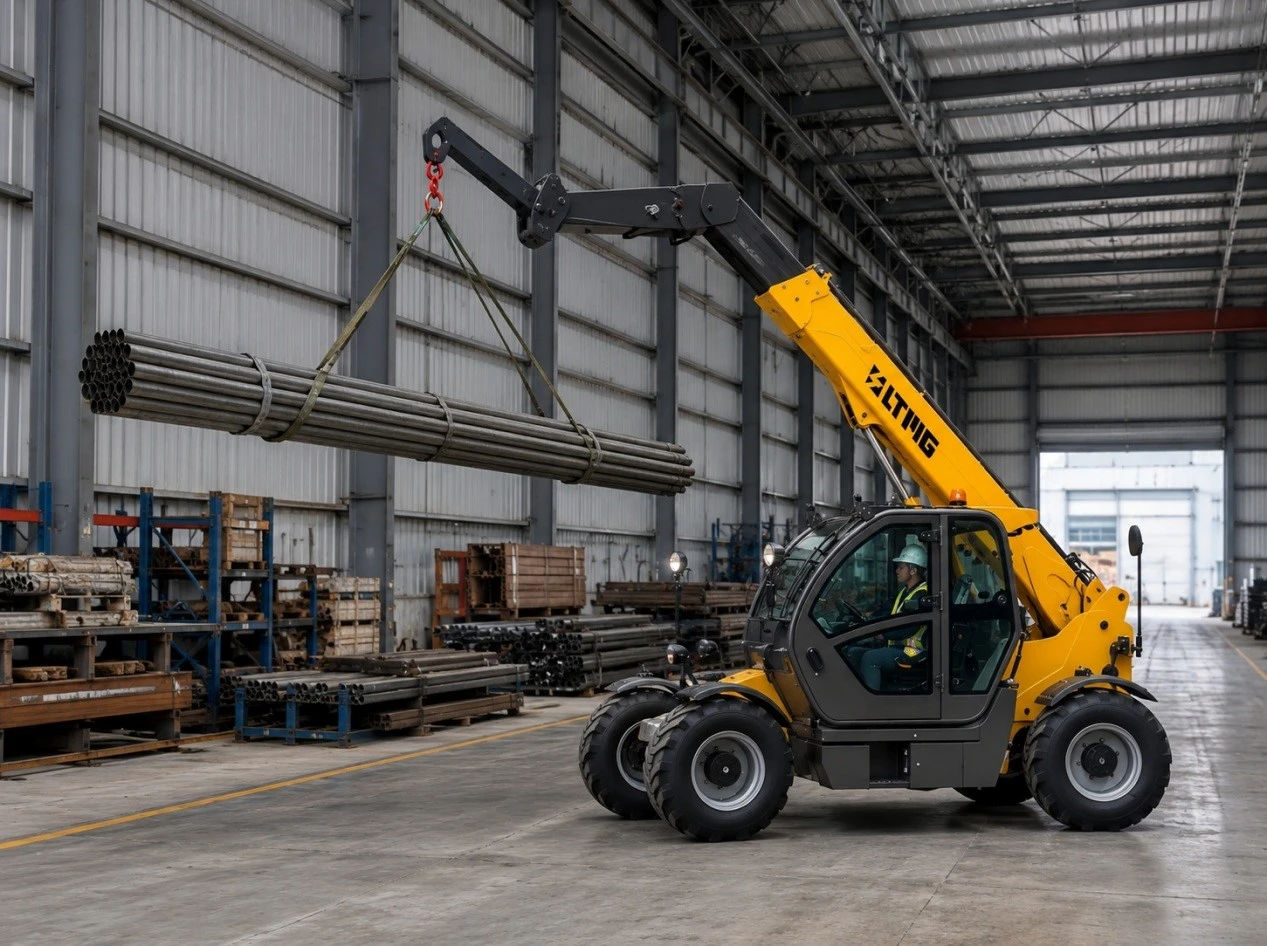
Handling Long & Oversized Materials: Transporting long steel bars, pipes, or timber with a standard forklift is risky due to limited fork spread and center-of-gravity shifts. While large cranes can lift them, they lack agility in tight spaces. Equipped with specialized hooks or long-material clamps, a telescopic forklift truck provides safe suspension support and extended reach while retaining the nimble maneuverability of a traditional forklift-the ultimate solution balancing reach and agility.
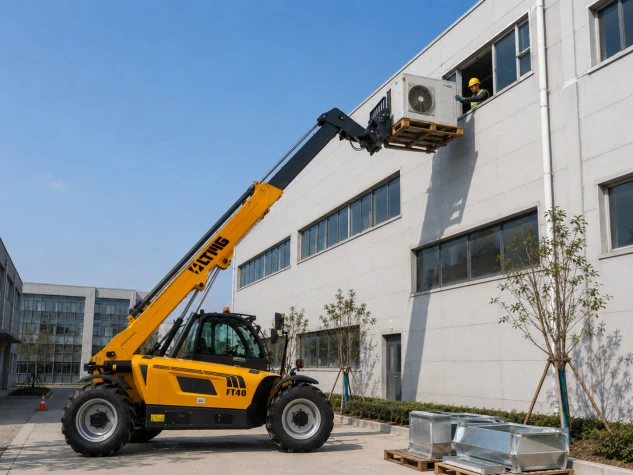
Precision Installation of Overhead Equipment: Whether installing HVAC units, ventilation ducts, or lighting systems on roofs or high exterior walls, a telescopic handler forklift reaches upper levels effortlessly. A single machine can replace the costly combination of a crane and a boom lift, significantly reducing project overhead.
3. When NOT to Use a Telehandler: 5 Scenarios to Avoid
While a telescopic handler is a highly adaptable champion, structural and performance limitations mean it isn't always the optimal choice for every extreme environment. Here are five scenarios where we recommend alternative equipment:
High-Density Indoor Warehousing
E-commerce and logistics warehouses feature tightly packed racking systems and narrow aisles that demand maximum maneuverability. Because a telescopic forklift has a longer chassis, it can feel bulky indoors.
Alternative: Reach Trucks. Specially designed for indoor high-bay warehousing, they feature a compact body, small turning radius, and a mast that extends forward and backward to stack goods in ultra-narrow aisles easily.
Fragile Material Transport
Installing fragile materials like glass curtain walls requires extreme micro-movement precision and stable suction; any sudden bump can lead to breakage. Standard forks or simple hooks on a telescopic handler forklift cannot offer the soft protection needed.
Alternative: Aerial Work Platforms with Vacuum Glass Suction Cups. They use constant-pressure suction technology to ensure even weight distribution during installation, guaranteeing a damage-free operation.
Personnel Lifting (Man-Lifting)
Professional high-altitude tasks-such as building painting, electrical maintenance, or facility repairs-demand stringent safety mechanisms for carrying personnel. At its core, a telescopic forklift truck is a material handling machine. Even though it can lift people using a work platform attachment, its visibility and built-in safety mechanisms fall short of specialized personnel lifts, increasing liability risks.
Alternative: Dedicated Boom Lifts or Scissor Lifts that strictly comply with international personnel-lifting safety standards.
Heavy-Duty Ground Transport
In the early phases of site development, environments are often filled with mud and boulders, requiring the frequent moving of ultra-heavy materials. This stage calls for high ground clearance and massive tractive effort. Because a telescopic handler has a boom that extends outward, its rated capacity drops drastically as the boom reaches out, increasing the risk of tipping if overextended.
Alternative: Heavy-Duty Rough Terrain Forklifts. Built with large-diameter off-road tires and a low center of gravity, they offer the rigid strength needed for high-efficiency, heavy-load ground transport.
High-Frequency, Low-Level Lifting
In factories or docks where goods only need to be lifted to basic heights but require non-stop "forward-pick-reverse-turn-place" cycles, using a telescopic forklift can be counterproductive. Its lifting process involves both booming up and extending out, making simple tasks overly complex and slowing down cycle times.
Alternative: Standard Counterbalance Forklifts. They offer fast lifting speeds and direct, precise actions, dominating regular-height material handling and stacking.
4. Core Advantages: Why it's the Ultimate Tool for Cost Reduction and Efficiency
In modern logistics, construction, and agriculture, a single-purpose machine can bottleneck your workflow. A telescopic handler forklift helps businesses break through these operational limitations to drive profitability.
- Advanced Lifting Dynamics: Unlike the strict vertical lift of traditional forklifts, a telescopic forklift offers diagonal lifting and excellent forward reach. Its high mobility allows operators to approach and pick loads from multiple angles, eliminating redundant steps and extra tools.
- Unmatched Horizontal Reach: The defining feature of a telescopic forklift truck is its ability to reach forward over obstacles without moving its chassis. For instance, it can reach all the way across a truck bed to unload it from one side, cutting unloading times in half.
- Versatile Attachments: Far from being just a oversized forklift, it can be fitted with over a dozen attachments, including buckets, bale clamps, and work platforms. This "one-machine-many-uses" capability eliminates the need to purchase multiple dedicated machines, maximizing your return on investment.
- Superior Off-Road Capability: Equipped with powerful 4WD and rugged pneumatic tires, a telescopic handler thrives on uneven terrain where standard counterbalance forklifts fail, and operates with greater agility than a crane, wiping out the costs of secondary material handling.
5. Buyer's Guide: 5 Factors to Consider Before Choosing a Telescopic Forklift
- Terrain and Workspace Dimensions: Analyze your site conditions. Is it wide open or restricted? Flat or rugged? Indoor or outdoor? Map out the minimum turning radius and clearance heights before matching them against machine specifications.
- Load Charts vs. Maximum Capacity: Never look solely at the maximum rated capacity on the brochure. Always review the Load Chart. Because extension changes the machine's center of gravity, the lifting capacity of a telescopic handler forklift decreases as the boom extends further or tilts lower. Ignoring this chart can lead to tipping hazards.
- Vertical Reach vs. Horizontal Forward Reach: Measure the exact vertical heights and horizontal distances your projects demand (e.g., reaching across a wide flatbed truck or over a perimeter wall). Ensuring the machine satisfies both dimensions is key to unlocking field efficiency.
- Primary Application & Job Tasks: Define what your machine will do most. If you are focused on agriculture, a quick-coupling system for attachments like silage grabs and buckets is vital. If you are in high-rise construction, the hydraulic smoothness of your crane hook or platform attachment takes priority for safety.
- Brand Reliability & Total Cost of Ownership (TCO): Due to their complex boom structures and multi-line hydraulic systems, telescopic handlers require advanced manufacturing precision. Opting for a low-quality, cheap machine often results in frequent downtime and expensive repairs. With over 20 years of deep expertise in construction machinery, LTMG builds reliability on strict quality control, seasoned global export experience, and a robust after-sales support system-ensuring your long-term maintenance costs stay low and your productivity stays high.
Contact Us
Whether you are hunting for the perfect model for a construction site or an agricultural setup, our veteran sales managers are here to provide tailored, one-on-one solutions. From verifying load charts to recommending the perfect attachment configurations, we ensure every penny of your budget translates directly into frontline productivity.