1. Why Forklift Battery Charging Safety Rules Matter
Electric forklifts, with their low noise and zero emissions, have become the central power source of modern warehousing and logistics. Unlike traditional internal combustion models, an electric forklift typically relies on either a lithium-ion battery or a lead acid battery for power. Depending on shift schedules and operational demands, the forklift charging mechanics will vary across different working environments.
Regardless of the battery chemistry, implementing a scientific and compliant charging process is critical to ensure personnel battery safety and maximize service life. Improper charging practices can slash an expensive battery's lifespan by up to 50%, while triggering severe issues like overheating, sulfation, and cell damage. Adhering to standardized protocols is the ultimate rule for enterprises looking to protect employees, cut operational costs, boost efficiency, and extend the lifespan of their forklift assets.
2. Pre-Charging Checklist
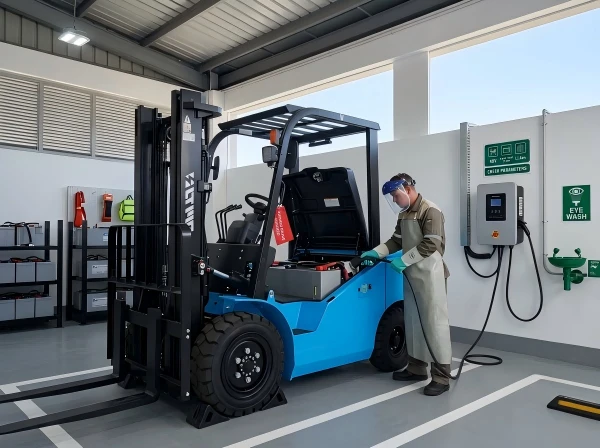
- Park and Lock the Vehicle: Park the forklift in the designated charging area. Ensure the zone is well-ventilated to prevent dangerous hydrogen gas accumulation. Engage the parking brake to keep the vehicle completely stationary and prevent accidental movement during forklift charging.
- Complete Power-Off: Turn off the ignition completely and remove the key. This effectively prevents parasite currents within the circuitry, reducing the risk of electrical faults or fire hazards.
- Venting and Ventilation: Open the forklift battery cover and any overlying shrouds to release trapped internal gases, mitigating the risk of localized gas concentration explosions.
- Physical Hardware Inspection: Check the battery case for cracks or acid leaks. Inspect charging cables, plugs, and terminal connectors for wear, fraying, or exposed wires. If any hardware damage is found, halt operations immediately and report it for professional maintenance.
- Wear Personal Protective Equipment (PPE): Operators must wear full safety gear before handling the battery. This includes splash-proof safety goggles, acid-resistant heavy gloves, and a protective apron to guard against chemical splashes or corrosive burns.
- Verify Parameter Matching: Confirm that the charger's specifications match the battery type, voltage, and capacity. Never use a 48V charger on a 36V battery. If operating a lithium forklift, a dedicated lithium charger must be used.
- Ensure the Battery is Fully Cooled: Batteries retain high internal heat immediately following heavy shifts. Charging right after operation is strictly prohibited; the battery must sit in a ventilated area to cool down to room temperature first.
3. Different Methods of Charging a Forklift Battery
Conventional Charging
Mainly applied to traditional lead-acid options. This method is usually done overnight when the truck is not in use, lasting 8 to 10 hours. It is ideal for single-shift operations where one complete charging cycle is completed daily, allowing a full charge and cool-down period to optimize lifespan.
Opportunity Charging
This method involves charging the battery during short breaks and downtime, lasting about 10 to 30 minutes per session multiple times a day. While it maximizes the uptime of an electric forklift during multi-shift rotations, frequent opportunity charging will significantly shorten the service life of a standard lead acid battery.
Fast Charging
Utilizing much higher currents to inject power over short time blocks, this method is tailored for high-intensity, time-critical setups where forklifts must return to work immediately. Because the current is extremely high, fleet managers must meticulously pair compatible batteries and chargers to handle the high electrical load safely without overheating.
4. How to Charge a Forklift Battery
- Disconnect the Battery from the Forklift's Electrical System: Ensure the battery plug is fully disconnected from the internal electrical system of the vehicle. Thoroughly inspect cables and connectors for any signs of wear or structural damage before proceeding.
- Connect the Battery to the Charger: Ensure the charger is switched off before making any connections. Connect the charger plug directly to the battery plug, verifying that positive matches positive and negative matches negative to prevent catastrophic short circuits.
- Turn on the Charger and Charge Completely: Turn on the charger power. For a lead acid battery, it is best practice to let the charging cycle complete uninterrupted. Pulling the plug prematurely can trigger rapid sulfation, permanently lowering capacity and cutting the forklift's operational cycle short.
- Allow the Battery to Cool Fully: Once charging completes, switch off the charger and unplug it. Crucially, let the battery rest and cool down before putting it back into service. The charging process generates significant heat, and immediate heavy use can trigger overheating faults and compromise battery safety.
- Check Water Levels and Add Water if Needed (For Lead-Acid): Check the fluid levels only after the battery has completely finished charging and cooling down. If the fluid level is low, top it off with distilled water up to the designated marker line to prevent exposed plates from oxidizing. Never add water prior to forklift charging, as the acid expands when heated and can overflow-corriding the truck frame and ruining the chemical balance of the electrolyte.
5. Maintenance Differences: Lead-Acid vs. Lithium-Ion
As outlined in the charging steps above, traditional lead-acid batteries demand labor-intensive post-charge maintenance (such as topping off water and mandatory cooling). In contrast, a modern lithium forklift shifts the fleet management paradigm with its "zero-maintenance" advantages. Below is a deep-dive comparison of daily maintenance differences between these technologies.
Watering and Fluid Level Maintenance
- Lead-Acid Battery: Demands high-frequency, meticulous manual checks. Distilled water must be added typically every 5 to 10 charging cycles. If neglected, low fluid levels cause permanent sulfation damage, rendering the battery useless.
- Lithium Battery: Employs a fully sealed design with no liquid electrolyte leakage risks. It requires zero water refilling throughout its lifespan, freeing operations from building costly watering stations and allowing labor hours to be redirected to high-value tasks.
Equalization Charging (Cell Balancing)
- Lead-Acid Battery: To prevent acid stratification and uneven cell voltage, lead-acid types require regular "equalization charging"-a low-current overcharging process. This must typically be scheduled over weekends, severely impacting fleet scheduling flexibility.
- Lithium Battery: Cell balancing is handled automatically. Whether during standard charging or opportunity charging during short breaks, the integrated Battery Management System (BMS) monitors and balances internal voltages in real time, eliminating manual intervention or extra downtime.
Battery Cooling Time
Lead-Acid Battery: Adheres to a strict "8-8-8 Rule" (8 hours of operation, 8 hours of charging, 8 hours of cooling). Forcing a truck back into high-intensity shifts without the full 8-hour cooldown accelerates internal chemical degradation, cutting battery life short.
Lithium Battery: Features minimal internal resistance and generates negligible heat, requiring zero cooling downtime. Once unplugged, a lithium forklift can return straight to heavy-duty workflows, allowing a single truck to handle multi-shift schedules seamlessly.
Infrastructure Requirements
- Lead-Acid Battery: Because they release dangerous hydrogen gas and corrosive acid mists during charging, facilities must build dedicated, highly ventilated battery rooms equipped with specialized safety infrastructure. This consumes premium warehouse square footage that could otherwise hold inventory.
- Lithium Battery: The charging process is clean and entirely gas-free. Compact chargers can be placed anywhere convenient near work zones, allowing warehouses to reclaim the space of old charging rooms to expand storage capacity.
6. Conclusion
In modern warehouse management, proper forklift charging directly dictates your operational efficiency, workplace safety, asset lifecycle, and total maintenance overhead. Maintaining strict battery safety protocols is not just about compliance-it is about securing your bottom line.
If you require customized guidance tailored to your specific fleet, or if you are looking to optimize your multi-shift logistics infrastructure with a high-efficiency electric forklift setup, we are ready to build the most high-ROI power solution for your business.